
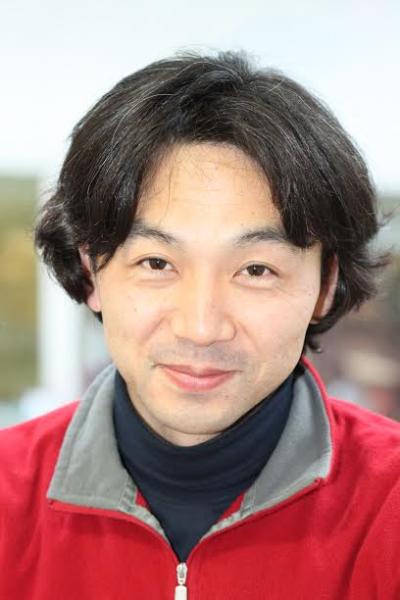
Reader in Social Neuroscience
Centre for Brain and Cognitive Development
Department of Psychological Sciences, Birkbeck, University of London
The Henry Wellcome Building, Malet Street, London WC1E 7HX
Phone: +44 (0)20 7631 6895
Fax: +44 (0)20 7631 6587
Email: a.senju at bbk dot ac dot uk
We are looking for sighted infants of parents who are blind!
Research interests
My main research interest is the developmental origin of the "Social Brain" network, and its atypical development in Autism Spectrum Disorder (ASD). Especially, I'm interested in how infants and children attend to, evaluate and react to others' social and communicative signal such as eye contact, contingent movement and referential gaze/pointing. Currently I'm utilizing both behavioural and electrophysiological measurement to tackle these questions.
Curriculum Vitae
Degrees
2000: B.A. Liberal Arts, University of Tokyo, Tokyo, Japan
The development of mind-reading test for typically developing individuals and individuals with autism.
(Supervisor: Toshikazu Hasegawa)
2002: M.Sc. Multidisciplinary Sciences, University of Tokyo, Tokyo, Japan
Others' eye gaze triggers reflexive orienting in children with autism.
(Supervisor: Toshikazu Hasegawa)
2005: Ph.D. Multidisciplinary Sciences, University of Tokyo, Tokyo, Japan
Processing of perceived direct gaze in typical adults and children with and without autism.
(Supervisor: Toshikazu Hasegawa)
Academic Positions
2002-2005: Research Fellow (DC1), Japan Society for the Promotion of Science, Tokyo, Japan
(Supervisor: Toshikazu Hasegawa)
2005, 2006: Researcher, Japan Agency of Science and Technology, Fukuoka, Japan
2005-2006: Leverhulme Trust Visiting Research Fellow, Birkbeck, University of London, London, UK
2006-2008: ESRC/MRC Interdisciplinary Postdoctoral Fellow, Birkbeck, University of London, London, UK
2008-2011: ESRC Research Fellow, Birkbeck, University of London, London, UK
2011-2016: MRC Career Development Award Fellow, Birkbeck, University of London, London, UK
2016-2017: Wellcome/Birkbeck ISSF Career Development Award Fellow, Birkbeck, University of London, London, UK
2014-present: Reader in Social Neuroscience, Department of Psychological Sciences, Birkbeck, University of London, London, UK
Grants
2000: Travel Award for Graduate Students, The University of Tokyo.
2002: Travel Award for Graduate Students, The University of Tokyo.
2002-2004: Three-year Graduate Fellowship, Japan Society for the Promotion of Science.
2005-2006: Visiting Fellowship, Leverhulme Trust, UK.
2006-2008: ESRC/MRC Interdisciplinary Postdoctoral Fellowship, Economic and Social Research Council and Medical Research Council, UK.
2008-2011: ESRC Research Fellowship, Economic and Social Research Council, UK.
2009-2010: Grant for the project: “Cognitive psychological experiment on the effect of cultural norms on the processing of eye contact”, Great Britain Sasakawa Foundation, Japan/UK.
2011-2012: Grant for the UK-Japan collaboration on developmental cognitive neuroscience, Great Britain Sasakawa Foundation, Japan/UK.
2011-2016: MRC Career Development Award, Medical Research Council, UK.
2012-2015: Individual Doctoral Grant (Bolsa de Doutoramento), Fundação para a Ciência e Tecnologia (FCT), Portugal (Project: Processing of eye contact in the subcortical pathway - testing the fast-track modulation model)
2013-2016: Bloomsbury College PhD studentship (project: Culture and autism: how cultural norms shape the neurocognitive development and societal understanding of autism)
2013-2017: MRC Industry CASE PhD Studentship (project: Going Global: Application of Portable Eye-tracking Technology to Study the Effect of Cultural Norms on the Development of Social Cognition)
2014-2015: Royal Society Daiwa Anglo-Japanese Foundation International Exchanges Award (project: Interaction between the socio-cultural environment and the development of autism)
2014 Medical Research Foundation Equipment Fund
2014 Grant for "Presentation at neuroethology symposium, and lectures and collaborative research at University of Tokyo", Great Britain Sasakawa Foundation
2016-2017 Wellcome/Birkbeck ISSF Career Development Fellowship, Wellcome/Birkbeck Institutional Strategic Support Fund, UK
2016-2017: Grant-in-Aid for the Promotion of Joint International Research (Fostering Joint International Research) (project: The cognitive mechanisms underlying the processing of socially relevant information embedded in bodily movement and its development), Japan Society for the Promotion of Science (PI: Masahiro Hirai)
2019: Wellcome Trust / Birkbeck Institutional Strategic Support Fund (project: Conference on culture and autism)
2019-2020: Daiwa Foundation Small Grant, Daiwa Anglo-Japanese Foundation
2019-2020: Grant for "Project meeting in Tokyo for collaboration comparing experiences of autistic people in the UK and Japan", Great Britain Sasakawa Foundation
2019-2024: Wellcome Trust Multi-user Equipment Grant (project: Toddlerlab CAVE Neuroimaging Facilities) (PI: Denis Mareschal)
Awards and Honours
2000: Presentation Award. Japanese Psychonomic Society.
2002: Presentation Award. Japanese Psychonomic Society.
2005: President’s Award of The University of Tokyo, The University of Tokyo.
2007: JPA Awards for International Contributions to Psychology, Award for Distinguished Early and Middle Career Contributions, Japanese Psychological Association.
2011: Neil O'Connor Award. British Psychological Society.
2011: Named as a Rising Star in Psychological Science, Association for Psychological Science.
2015: Margaret Donaldson Early Career Prize, British Psychological Society.
2015: Nakayama Award, Award for Distinguished Early and Middle Career Contributions (Shorei-sho), Nakayama Foundation for Human Science.
Publications
2020
Ishikawa, M., Senju, A., & Itakura, S. (in press). Learning Process of Gaze Following: Computational Modelling Based on Reinforcement Learning, Frontiers in Psychology
Haensel, J. X., Danvers, M., Ishikawa, M., Itakura, S., Tucciarelli, R., Smith, T. J., & Senju, A. (2020). Culture modulates face scanning during dyadic social interactions, Scientific Reports, 10:1958.
Hirai, M., & Senju, A. (2020). The two-process theory of biological motion processing. Neuroscience & Biobehavioral Review, 111, 114-124.
2019
Leal Rato, M., Mares, I., Aguiar de Sousa, D., Senju, A., & Martins, I. P. (2019). Direct gaze partially overcome hemispatial neglect and capture spatial attention. Frontiers in Psychology, 9, 2702.
Burra, N., Mares, I., & Senju, A. (2019). Top-down attention modulation on rapid direct gaze processing. Wiley Interdisciplinary Reviews: Cognitive Science, e1500.
2018
Vernetti, A., Ganea, N., Tucker, L., Charman, T., Johnson, M. H,, & Senju, A. (2018). Infant neural sensitivity to eye gaze depends on early experience of gaze communication. Developmental Cognitive Neuroscience, 34, 1-6.
Ganea, N., Hudry, K., Vernetti, A., Tucker, L., Charman, T., Johnson, M. H., & Senju, A. (2018). Development of adaptive communication skills in infants of blind parents. Developmental Psychology, 54, 2265-2273.
Vernetti, A., Senju, A., Charman, T., Johnson, M. H.,, Gliga, T., & the BASIS Team (2018). Simulating interaction: using gaze-contingent eye-tracking to measure the reward value of social signals in toddlers with and without autism, Developmental Cognitive Neuroscience, 29, 21-29.
Kim, S., Paulus, M., Sodian, B., Itakura, S., Ueno, M., Senju, A., Proust, J. (2018). Selective learning and teaching among Japanese and German children. Developmental Psychology, 54, 536-542.
Mares, I., Smith. M. L., Johnson, M. H., & Senju, A. (2018). Low spatial frequency information modulates the processing of eye contact. Biological Psychology, 135, 76-83.
2017
Vernetti, A., Smith. T. J., & Senju, A. (2017). Gaze-contingent reinforcement learning reveals incentive value of social signals in young children and adults. Proceedings of the Royal Society B: Biological Sciences, 284, 20162747.
2016
Mares, I., Smith. M. L., Johnson, M. H., & Senju, A. (2016). Direct gaze facilitates rapid orienting to faces: evidence from express saccades and saccadic potentials. Biological Psychology, 121, 84-90.
2015
Senju, A., Vernetti, A., Ganea, N., Hudry, K., Tucker, L., Charman, T., & Johnson, Mark H. (2015). Early Social Experience Affects the Development of Eye Gaze Processing. Current Biology, 25, 3086-3091.
Johnson, M. H., Senju, A., Tomalski, P. (2015). The two-process theory of face processing: Modifications based on two decades of data from infants and adults, Neuroscience & Biobehavioral Reviews, 50, 169-179.
2014
Akechi, H., Stein, T., Senju, A., Kikuchi, Y., Tojo, Y., Osanai, T., Hasegawa, T. (2014). Absence of preferential unconscious processing of eye contact in adolescents with autism spectrum disorder, Autism Research, 7, 590-597.
Gliga, T., Senju, A., Pettinato, M., Charman, T., Johnson, M. & the BASIS Team (2014). Spontaneous Belief Attribution in Younger Siblings of Children on the Autism Spectrum. Developmental Psychology, 50, 903-913.
Elsabbagh, M., Bedford, R., Senju, A., Charman, T., Pickles, A., Johnson, M. H., & The BASIS Team (2014). What you see is what you get: Contextual modulation of face scanning in typical and atypical development, Social, Cognitive and Affective Neuroscience, 9, 538-543.
2013
Senju, A., Vernetti, A., Kikuchi, Y., Akechi, H., & Hasegawa, T. (2013). Cultural modulation of face and gaze scanning in young children, PLOS ONE, 8, e74017.
Usui, S., Senju, A., Kikuchi, Y., Akechi, H., Hasegawa, T., Tojo, Y., Osanai, H. (2013). Presence of contagious yawning in children with autism spectrum disorder, Autism Research and Treatment, 2013, Article ID 971686, 8 pages.
Senju, A., Tucker, L., Pasco, G., Hudry, K., Elsabbagh, M., Charman, T., & Johnson, M. H. (2013). The importance of the eyes: communication skills in infants of blind parents. Proceedings of the Royal Society B: Biological Sciences, 280(1760). 5)
Kikuchi, Y., Senju, A., Hasegawa, T., Tojo, Y., & Osanai, H. (2013). The effect of spatial frequency and face inversion on facial expression processing in children with autism spectrum disorder, Japanese Psychological Research, 55, 118-130.
Akechi, H., Senju, A., Uibo, H., Kikuchi, Y., Hasegawa, T., & Hietanen, J. K. (2013). Attention to Eye Contact in the West and East: Autonomic Responses and Evaluative Ratings, PLOS ONE, 8, e59312.
Senju, A., Vernetti, A., Kikuchi, Y., Akechi, H., Hasegawa, T., & Johnson, M. H. (2013). Cultural background modulates how we look at other persons' gaze, International Journal of Behavioral Development, 37, 130-139.
Senju, A. (2013). Atypical development of spontaneous social cognition in autism spectrum disorders. Brain & Development, 35, 96-101.
2012
Karmiloff-Smith, A., Broadbent, H., Farran, E. K., Longhi, E., D'Souza, D., Metcalfe, K., Tassabehji, M., Wu, R., Senju, A., Happé, F., Turnpenny, P., & Sansbury, F. (2012). Social Cognition in Williams Syndrome: Genotype/phenotype Insights from Partial Deletion Patients. Frontiers in Psychology, 3.
Bedford, R., Elsabbagh, M., Gliga, T., Pickles, A., Senju, A., Charman, T., Johnson, M. H., & the BASIS team. (2012). Precursors to social and communication difficulties in infants at-risk for autism: Gaze following and attentional engagement. Journal of Autism and Developmental Disorders, 42, 2208-2218.
Senju, A. (2012). Spontaneous theory of mind and its absence in autism spectrum disorders. Neuroscientist, 18, 108-113.
2011
Senju, A., Southgate, V., Snape, C., Leonard, M., & Csibra, G. (2011). Do 18-months-olds really attribute mental states to others? A critical test. Psychological Science, 22, 878-880.
Deligianni, F., Senju, A., Gergely, G., & Csibra, G. (2011). Automated gaze-contingent objects elicit orientation following in 8-months-old infants. Developmental Psychology, 47, 1499-1503.
Zwickel, J., White, S., Coniston, D., Senju, A., & Frith, U. (2011). Exploring the building blocks of social cognition: spontaneous agency perception and visual perspective taking in autism. Social Cognitive and Affective Neuroscience, 6, 564-571.
Kikuchi, Y., Senju, A., Akechi, H., Tojo, Y., Osanai, H., & Hasegawa, T. (2011). Atypical disengagement from faces and its modulation by the control of eye fixation in children with autism spectrum disorder, Journal of Autism and Developmental Disorders, 41, 629-645.
Stein, T., Senju, A., Peelen, M. V., & Sterzer, P. (2011) Eye contact facilitates awareness of faces during interocular suppression. Cognition, 119, 307-311.
Senju, A., Kikuchi, Y., Akechi, H., Hasegawa, T., Tojo, Y., Osanai, H., & Johnson, M. H. (2011). Atypical modulation of face-elicited saccades in autism spectrum disorder in a double-step saccade paradigm. Research in Autism Spectrum Disorders,5, 1264-1269.
Akechi, H., Senju, A., Kikuchi, Y., Tojo, Y., Osanai, H., & Hasegawa, T. (2011). Do Children with ASD Use Referential Gaze to Learn the Name of An Object?: An Eye-Tracking Study. Research in Autism Spectrum Disorders, 5, 1230-1242.
2010
Senju, A., & Johnson, M. H. (2010). Is eye contact the key to the social brain? Behavioral and Brain Sciences, 33, 458-459.
Senju, A., Southgate, V., Miura, Y., Matsui, T., Hasegawa, T., Tojo, Y., Osanai, H., & Csibra, G. (2010). Absence of spontaneous action anticipation by false belief attribution in children with autism spectrum disorder. Development and Psychopathology, 22, 353-360. (PDF)
Senju, A. (2010). Contagious yawning: Developmental and comparative perspectives. In O. Walusinski (Eds.), The Mystery of Yawning in Physiology and Diseases. Frontiers of Neurology and Neuroscience. Basel: Karger, vol.28, pp 113-119.
Akechi, H., Senju, A., Kikuchi, Y., Tojo, Y., Osanai, H., & Hasegawa, T. (2010). The effect of gaze direction on the processing of facial expressions in children with autism spectrum disorder: An ERP study. Neuropsychologia, 48, 2841-2851.
Farroni, T., & Senju, A. (2010). Specialized brain for the social vision: Perspectives from typical and atypical development. In R. B. Adams, Jr., N. Ambady, K. Nakayama & S. Shimojo (Eds.), The Science of Social Vision. New York: Oxford University Press, pp 421-444.
2009
Senju, A., Kikuchi, Y., Akechi, H., Hasegawa, T., Tojo, Y., & Osanai, H. (2009). Does eye contact induce contagious yawning in children with autism spectrum disorder? Journal of Autism and Developmental Disorders, 39, 1598-1602. (doi:10.1007/s10803-009-0785-5)
Kikuchi, Y., Senju, A., Tojo, Y., Osanai, H., & Hasegawa, T. (2009). Face does not capture special attention in children with Autism Spectrum Disorder: A change blindness study. Child Development, 80, 1421-1433. (doi:10.1111/j.1467-8624.2009.01342.x)
Senju, A., & Johnson, M. H. (2009). Atypical eye contact in autism: Models, mechanisms and development. Neuroscience & Biobehavioral Reviews, 33, 1204-1214. (doi:10.1016/j.neubiorev.2009.06.001) (PDF)
Senju, A., Southgate, V., White, S., & Frith, U. (2009). Mindblind eyes: An absence of spontaneous theory of mind in Asperger syndrome. Science, 325, 883-885. [Abstract and reprint via Science "refer" service]
Akechi, H., Senju, A., Kikuchi, Y., Tojo, Y., Osanai, H., & Hasegawa, T. (2009). Does gaze direction modulate facial expression processing in children with Autism Spectrum Disorder?. Child Development, 80, 1134-1146. (doi:10.1111/j.1467-8624.2009.01321.x)
Senju, A., & Johnson, M. H. (2009). The eye contact effect: Mechanisms and development. Trends in Cognitive Sciences, 13, 127-134. (doi:10.1016/j.tics.2008.11.009) (PDF)
2008
Senju, A., Csibra, G., & Johnson, M. H. (2008). Understanding the referential nature of looking: Infants' preference for object-directed gaze. Cognition, 108, 303-319. (doi:10.1016/j.cognition.2008.02.009) (PDF)
Senju, A., Kikuchi, Y., Hasegawa, T., Tojo, Y., & Osanai, H. (2008). Is anyone looking at me? Direct gaze detection in children with and without autism. Brain and Cognition, 67, 127-139. (doi:10.1016/j.bandc.2007.12.001) (PDF)
Senju, A., & Csibra, G. (2008). Gaze following in human infants depends on communicative signals. Current Biology, 18, 668-671. (doi:10.1016/j.cub.2008.03.059) (PDF)
Joly-Mascheroni, R. M., Senju, A., & Shepherd, A. J. (2008). Dogs catch human yawns. Biology Letters, 4, 446-448. (doi:10.1098/rsbl.2008.0333) (PDF) | (Video)
2007
Senju, A., Maeda, M., Kikuchi, Y., Hasegawa, T., Tojo, Y., & Osanai, H. (2007). Absence of contagious yawning in children with autism spectrum disorder. Biology Letters, 3, 706-708. (doi:10.1098/rsbl.2007.0337) (PDF)
Southgate, V., Senju, A., & Csibra, G. (2007). Action anticipation through attribution of false belief by two-year-olds. Psychological Science, 18, 587-592. (doi:10.1111/j.1467-9280.2007.01944.x) (PDF)
2006
Senju, A., Johnson, M. H. & Csibra, G. (2006). The development and neural basis of referential gaze perception. Social Neuroscience, 1, 220-234. (doi:10.1080/17470910600989797)
Senju, A., & Hasegawa, T. (2006). Do the upright eyes have it? Psychonomic Bulletin & Review, 13, 223-228. (PDF)
Kunihira, Y., Senju, A., Dairoku, H., Wakabayashi, A., & Hasegawa, T. (2006). 'Autistic' traits in non-autistic Japanese populations: Relationships with personality traits and cognitive ability. Journal of Autism and Developmental Disorders, 36, 553-566. (PDF)
2005
Senju, A., & Hasegawa, T. (2005). Direct gaze captures visuospatial attention. Visual Cognition, 12, 127-144. (PDF)
Senju, A., Hasegawa, T., & Tojo, Y. (2005). Does perceived direct gaze boost detection in adults and children with and without autism? The stare-in-the-crowd effect revisited. Visual Cognition, 12, 1474-1496. (PDF)
Senju, A., Tojo, Y., Yaguchi, K., & Hasegawa, T. (2005). Deviant gaze processing in children with autism: An ERP study. Neuropsychologia, 43, 1297-1306. (PDF)
Hirai, M., Senju, A., Fukushima, H., & Hiraki, K. (2005). Active processing of biological motion perception: An ERP study. Cognitive Brain Research. 23, 387-396. (PDF)
2003-2004
Senju, A., Tojo, Y., Dairoku, H., & Hasegawa, T. (2004). Reflexive orienting in response to eye gaze and an arrow in children with and without autism. Journal of Child Psychology and Psychiatry, 45, 445-458. (PDF)
Senju, A., Yaguchi, K., Tojo, Y., & Hasegawa, T. (2003). Eye contact does not facilitate detection in children with autism. Cognition, 89, B43-B51. (PDF)
1) Senju et al. (2007) was featured in: news@nature.com, Reuters, The Guardian, The Daily Telegraph, The Independent, The Herald, Irish Independent, The Globe and Mail, spektrumdirect, scienceticker.info, Wissenschaft, Der Tagesspiegel, Nooderlicht, Hír TV, National Geographic Magyarország, Corriere della Sera, Il Messagerro, El Confidencial, Lidovky, Salajevo-X, Postimees, Gândal, El Colombiano, El Comercio, El Mercurio, ABC.net.au, WebIndia123.com, The Daily India, MedIndia.com, The Times of India, vnexpress, Yam天空-新聞;, News-Medical.net, Pretoria News, Le Scienze, Science & Vie, Televisa, BBC Indonesia and Birkbeck, University of London.
2) Joly-Mascheroni et al. (2008) was featured in: BBC, ITN, Reuters, The Guardian, The Daily Telegraph, The Daily Mail, The Daily Express, The Metro, The Scotsman, Science NOW, Science News, Milwaukee Journal Sentinel, Ynet, Los Angels Times, Seattle Times, ABC News, The Irish Times, ABC.net.au, The Hindu, 新华网[English], 朝日新聞; [English], nana10, Die Zeit, The Veterinary Record, Cães & Cia, Ladies' Home Journal, Weekly Reader, Greater Good Magazine, Scholastic SuperScience Magazine, BBC Breakfast, BBC Radio 4, BBC Five Live, BBC World Service, BBC Radio Scotland, BBC Radio Cambridge, BBC Radio Newcatsle, BBC Radio Northern Ireland, SPIN 1038, ZDF and Birkbeck, University of London.
3) Senju & Csibra (2008) was featured in: Frith, C. D. (2008). Social cognition: Hi there! Here's something interesting. Current Biology, 18, R524-R525. [ScienceDirect]
4) Senju, Southgate, White & Frith (2009) was featured in: The Times, Reuters Health, ScientificAmerican.com, Simons Foundation News & Commentary and Birkbeck, University of London.
5) Senju et al. (2013) was featured in BBC Radio 4, The Guardian, The NB magazine, ScienceNow, ESRC, LiveScience, ABC, The Royal Society, Fox News,Yahoo! News, Orland Sentinel, Mother Nature Network, The Huffington Post, Wired, Wissenschaft aktuell Nachrichtendienst, Orient Press, Phys.org, InfoGyőr, Вести.Ru, Sveriges Radio, Optometry Today and The Scientist.
Copyright Notice: The documents distributed here have been provided as a means to ensure timely dissemination of scholarly and technical work on a noncommercial basis. Copyright and all rights therein are maintained by the authors or by other copyright holders, notwithstanding that they have offered their works here electronically. It is understood that all persons copying this information will adhere to the terms and constraints invoked by each author's copyright. These works may not be reposted without the explicit permission of the copyright holder.